Identifying Real Linen Postcards from Smooth Stock

Have you ever picked up a vintage postcard that looked like it had a heavy, fabric-like texture, only to realize it was actually just a standard smooth-stock card with a high-gloss finish? Distinguishing between true linen texture and the illusion created by printing techniques is a common hurdle for new collectors. This post breaks down the physical differences between linen-era postcards and standard paper stocks so you can accurately identify what's in your hands.
What Is a Linen Postcard?
A linen postcard is a type of printed cardstock that features a distinct, embossed texture designed to mimic the look of woven fabric. While they aren't actually made of cloth, the paper itself has a raised, cross-hatched pattern that catches the light in a specific way. This texture became incredibly popular in the United States during the early 20th century, specifically from the 1900s through the 1940s.
If you look closely at a genuine linen card, you'll see a repetitive, grid-like pattern of tiny ridges and valleys. This wasn't just an aesthetic choice; it helped the printing process handle the vibrant, saturated colors that became a hallmark of the era. The texture adds a certain depth to the image that a flat, smooth card simply can't replicate.
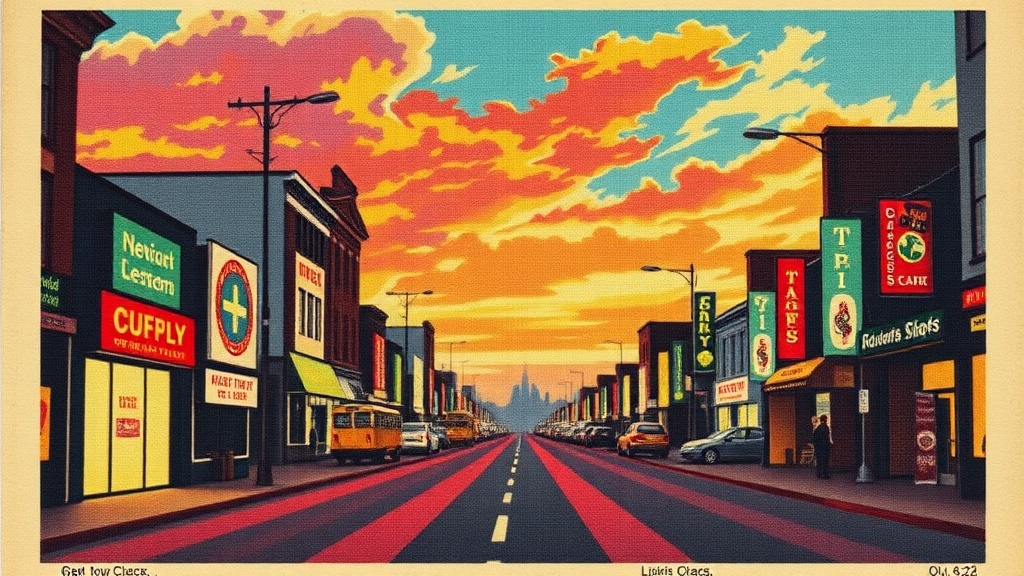
Most of these cards were produced by companies like Curt Teich & Co., a giant in the postcard industry. If you see a "Curt Teich" imprint on the back or bottom, you're likely looking at a classic piece of American-made linen history. These cards often feature incredibly bright, almost neon-like colors that look much more vivid than the muted tones of the previous "Golden Age" of postcards.
It's important to note that "linen" refers to the texture of the paper, not the material of the card itself. You won't find actual fabric fibers in the pulp, but the embossed effect is quite convincing when you run your thumb over it. It's a tactile experience that defines a huge chunk of mid-century ephemera.
How Do I Tell the Difference Between Linen and Smooth Stock?
The most reliable way to distinguish them is by using a combination of tactile touch, light reflection, and visual inspection of the grain.
First, use your sense of touch. A true linen postcard will feel slightly rough or "toothy" under your fingertips. If you run your nail across the surface, you should feel a consistent, micro-textured grain. A smooth-stock card, on the other hand, will feel much more uniform and lacks that physical resistance. Even a high-quality "satin" or "matte" finish will feel significantly smoother than the bumpy surface of a linen-era card.
Next, look at how the light hits the card. Because of the embossed pattern, a linen postcard will have a "diffused" light effect. The light hits the tiny ridges and creates microscopic shadows, making the card look less reflective. If you tilt a card under a desk lamp and the light bounces off in a single, sharp-edged reflection, you're likely looking at a smooth, coated stock. A linen card will scatter that light across the texture.
Here is a quick breakdown of what to look for during your inspection:
| Feature | Linen Postcard | Smooth Stock Postcard |
|---|---|---|
| Surface Texture | Embossed, bumpy, or "toothy" | Flat, smooth, or slightly waxy |
| Light Reflection | Diffused/scattered light | Sharp/direct light reflection |
| Color Saturation | Vibrant, high-contrast colors | Varies, but often more subtle |
| Often slightly thicker appearance | Usually thinner or more uniform |
One thing to watch out for is the "faux-linen" look. Some modern reproductions or much later postcards use a digital printing method that simulates the look of linen without the actual physical embossing. These are essentially flat images that just *look* textured. If the card looks textured but feels perfectly smooth to the touch, it's a print with a high-resolution texture pattern, not a true linen card.
You might also encounter "glossy" cards. These are common in the mid-to-late 20th century and are quite different. A glossy card has a coated surface designed to make colors pop, but it lacks the structural grain of a linen card. If you're checking a collection for authenticity, don't confuse a high-gloss finish with a linen texture.
Why Does the Paper Type Matter for Collectors?
The type of paper determines the historical era, the rarity, and the overall value of the piece in the eyes of collectors. For many, the linen era represents a peak in the "artistic" side of mass-produced postcards because of the vivid, almost psychedelic colors used in the 1930s.
If you're trying to date a card, the paper stock is a massive clue. For example, a card with a truly textured linen surface will almost certainly date between 1905 and 1945. If you find a card that looks like it has a linen pattern but the back has a "divided back" (where the address and message are separated by a line), you're in the right ballpark. If the back is a single, undivided space for the message, you're looking at an earlier era entirely.
Understanding these nuances helps you avoid overpaying for what might be a much later, less-valuable print. Collectors often look for specific printers—like the Postcard manufacturers mentioned earlier—to verify the pedigree of a piece. A Curt Teich linen card is a much more certain bet for a collector than a generic, unbranded smooth-stock card from the 1960s.
It's also worth noting that the texture affects how you should handle and store these items. Because linen cards have a more "open" surface, they can actually trap more dust or oils from your skin than a smooth, coated card. When you're handling high-value pieces, it's a good idea to check for any physical degradation. You might want to practice checking postcard edges for hidden damage, as the embossed edges can sometimes be more prone to fraying than a standard smooth-stock card.
The texture also affects how ink behaves. On a linen card, the ink often sits in the "valleys" of the texture, which can lead to a very specific type of color saturation that is hard to replicate. This is why vintage linen postcards have such a distinct "look" compared to the more modern, flat-looking postcards of the 1950s and 60s.
Common Pitfalls to Avoid
- Confusing "Matte" with "Linen": A matte finish is flat and non-reflective, but it lacks the physical ridges of a linen card.
- Assuming Glossy is Linen: Glossy cards are coated for shine; linen cards are embossed for texture.
- Ignoring the Weight: True linen-era cards often have a certain heft and thickness that feels different from modern, thin-stock postcards.
- Relying Solely on Sight: Always use your fingers. If you don't feel a grain, it's not a linen card.
If you're looking at a card and you're still not sure, try the "light tilt" test. Hold the card at a 45-degree angle to a single light source. If the light reflects in a single, bright line, it's smooth. If the light seems to "shimmer" or break up into a thousand tiny points, you've likely found a genuine linen texture.
When you're building a collection, being able to identify these differences is what separates a casual buyer from a serious philatelist or ephemera enthusiast. It's the difference between buying a generic "vintage-looking" card and a genuine piece of mid-century printing history.
If you're worried about how these textures might react to the environment, remember that the "valleys" in the paper can hold onto moisture or dust. Proper storage is a must. You can find more tips on selecting proper storage solutions for vintage paper to ensure your linen pieces stay in pristine condition.